23
hoods tested in one week
About 2 hours
to get into a rhythm: set up, test, record, move on
Same day
re-tests, now done in-house
The ask
See containment, not just a number
Every hood had just passed its face velocity check after the controls upgrade. Tricia Hahn, JBU's chemical hygiene officer, wanted to see containment before the semester started, while the contractor's warranty was still open.
How it worked
One kit, one week
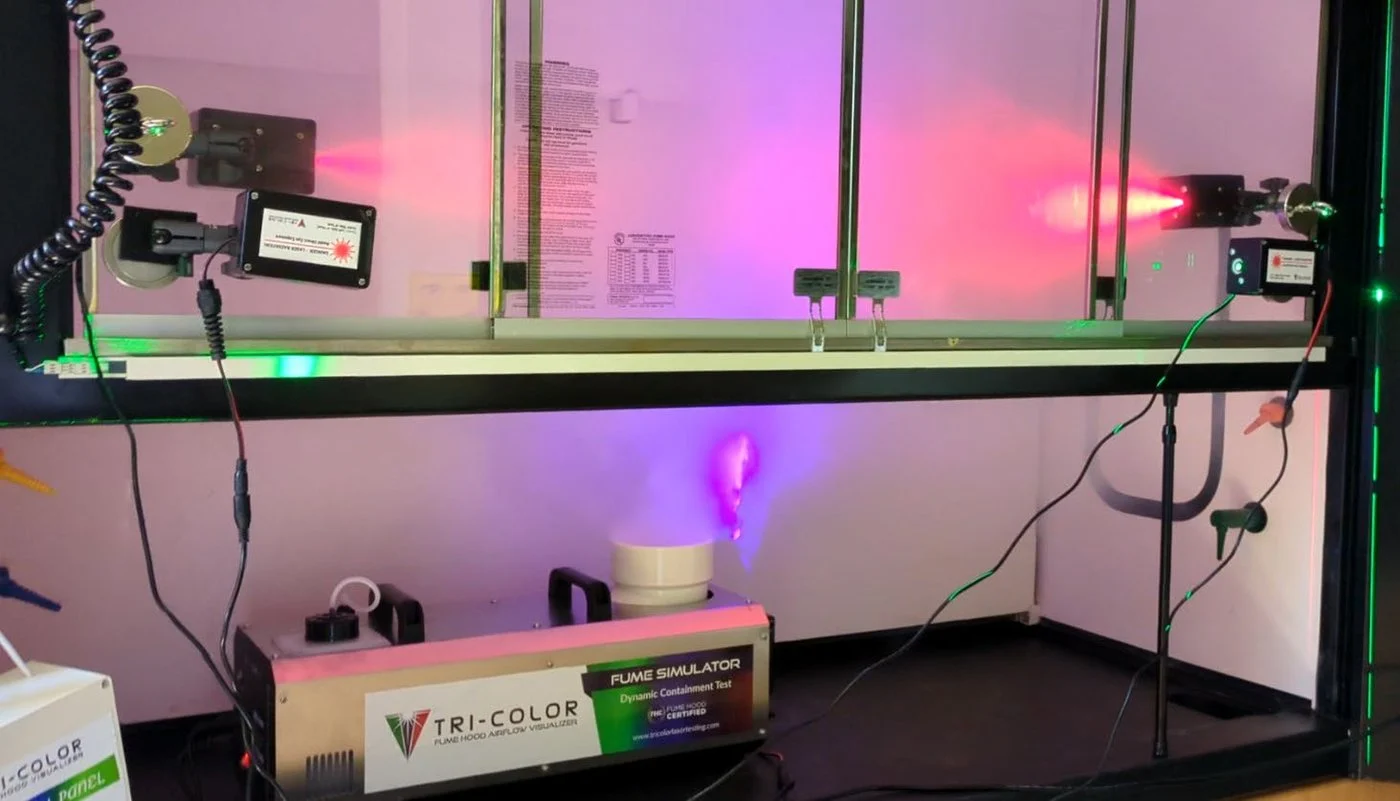
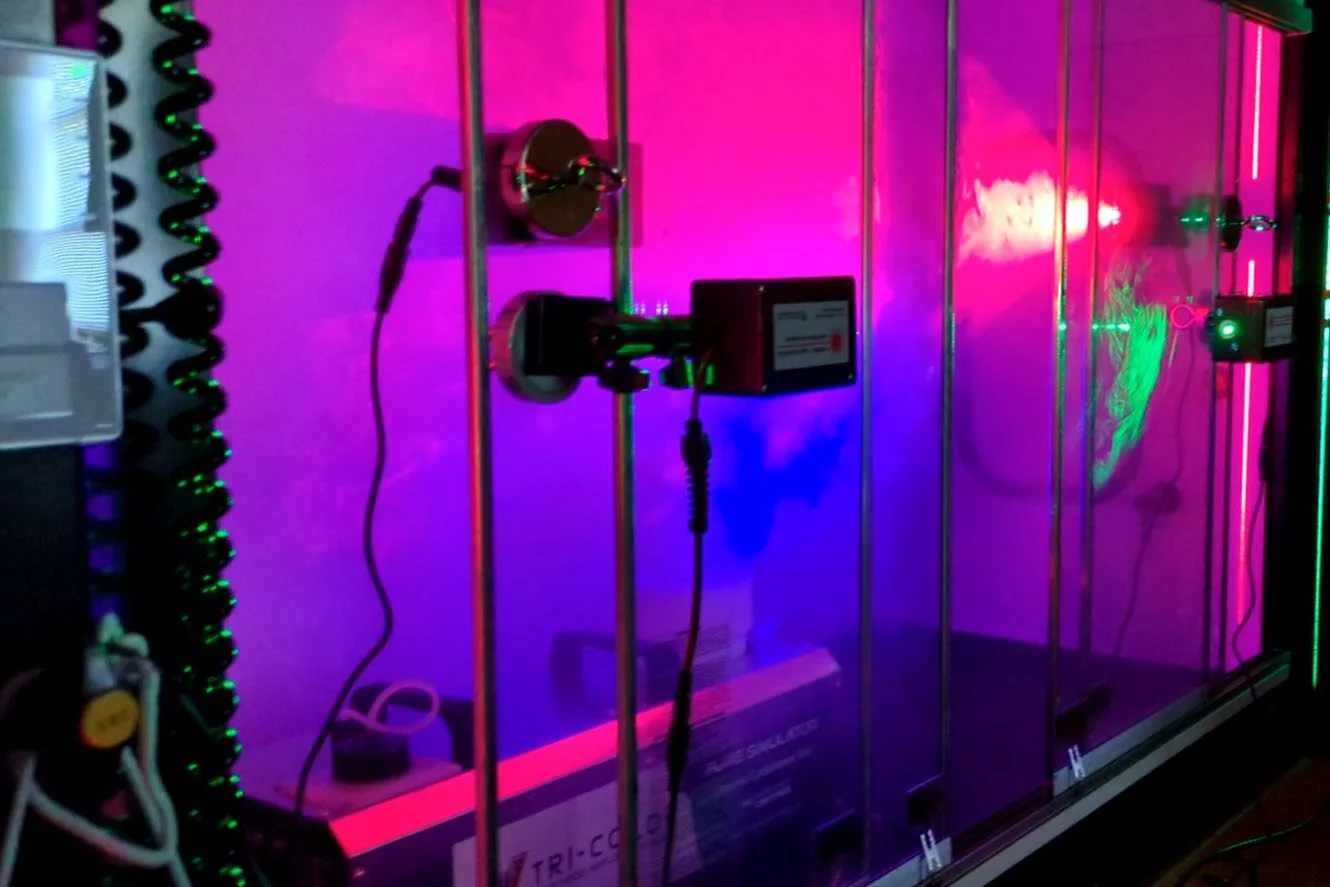
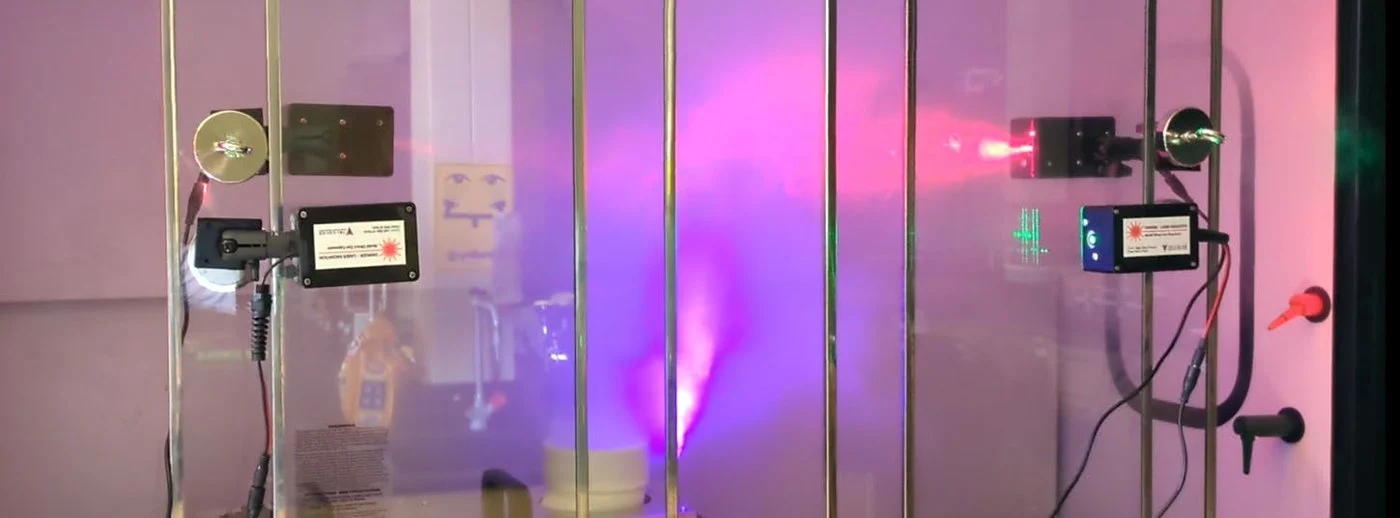
She rented a Tri-Color kit and tested every hood with the chemistry department chair: Tri-Color dynamic challenges with walk-bys, sash moves and supply air running, alongside face velocity and smoke.
What Tri-Color showed
A leak at a normal reading
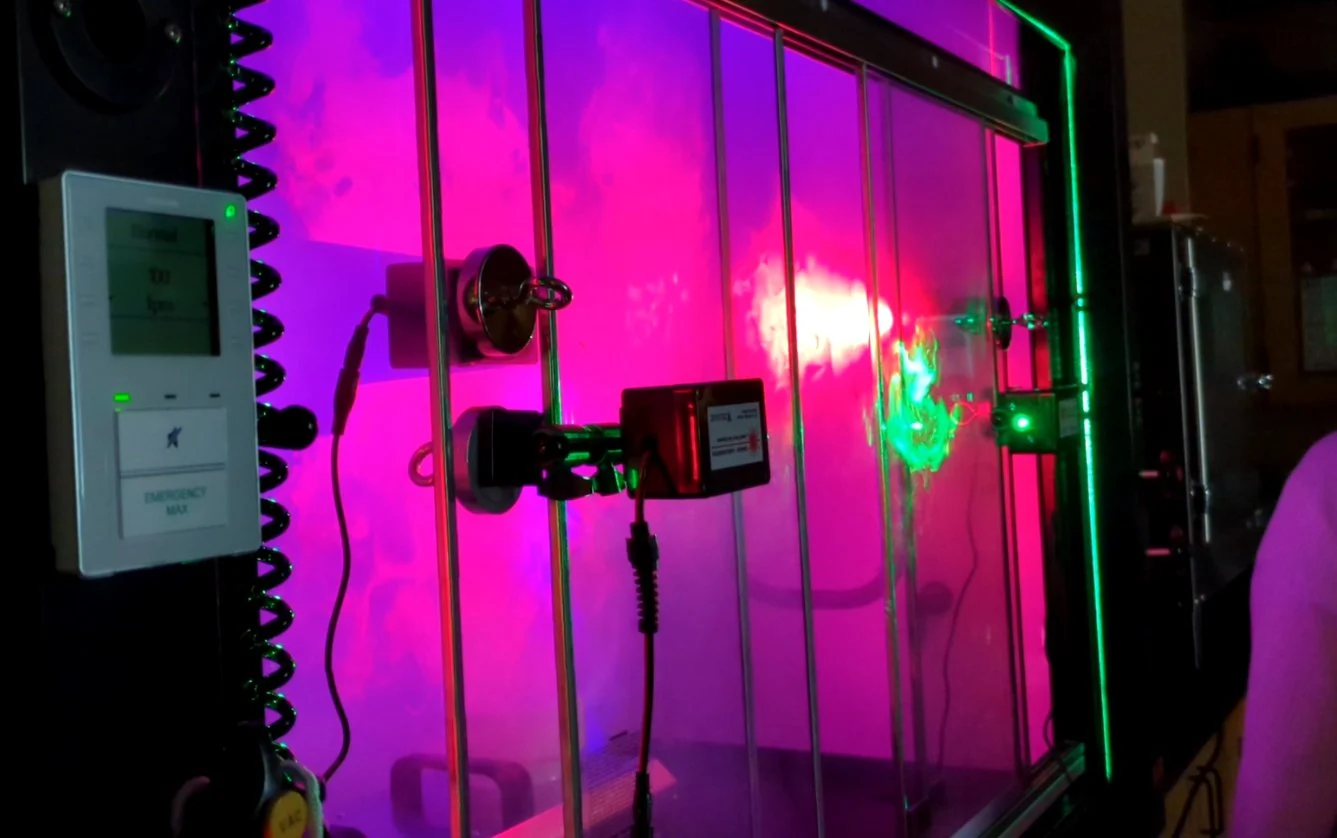
One hood rolled out at the face during a fast walk-by while its monitor read 100 fpm. Findings went to the contractor under warranty, a few hoods were readjusted and re-tested right away, and 22 of 23 stayed in service.
What the testing found
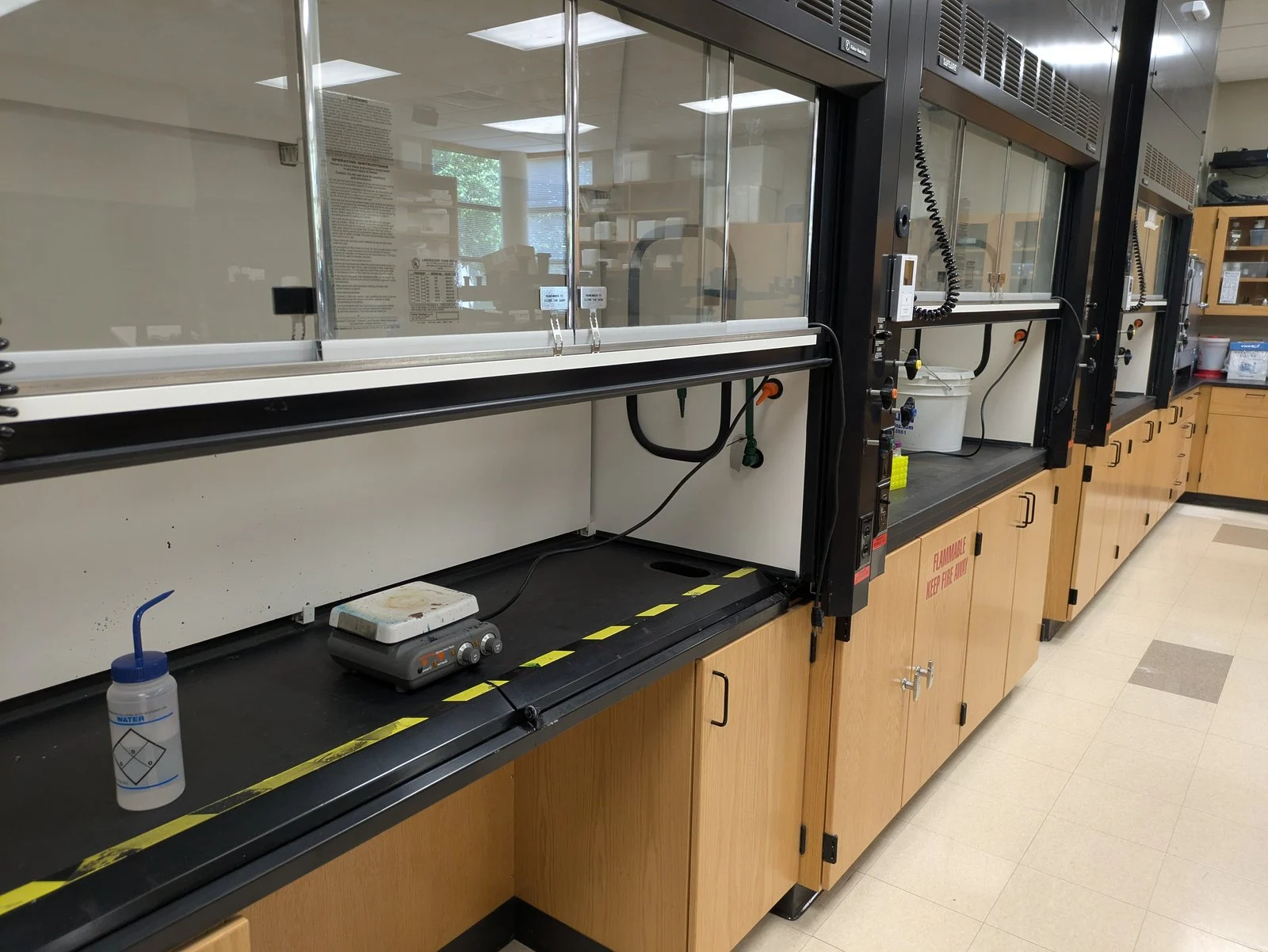
Three hoods, one exhaust fan
| Condition | Face velocity | Tri-Color |
|---|---|---|
| Each hood alone | 100 fpm | Pass |
| Any two open | 100 fpm | Pass |
| Fast walk-by, two tiles out, at hood 3 | 100 fpm, no alarm | Fail: haze rolls out at the face |
| All three open to 18″ | Hood 3 drops to 65 fpm, low alarm | Fail |
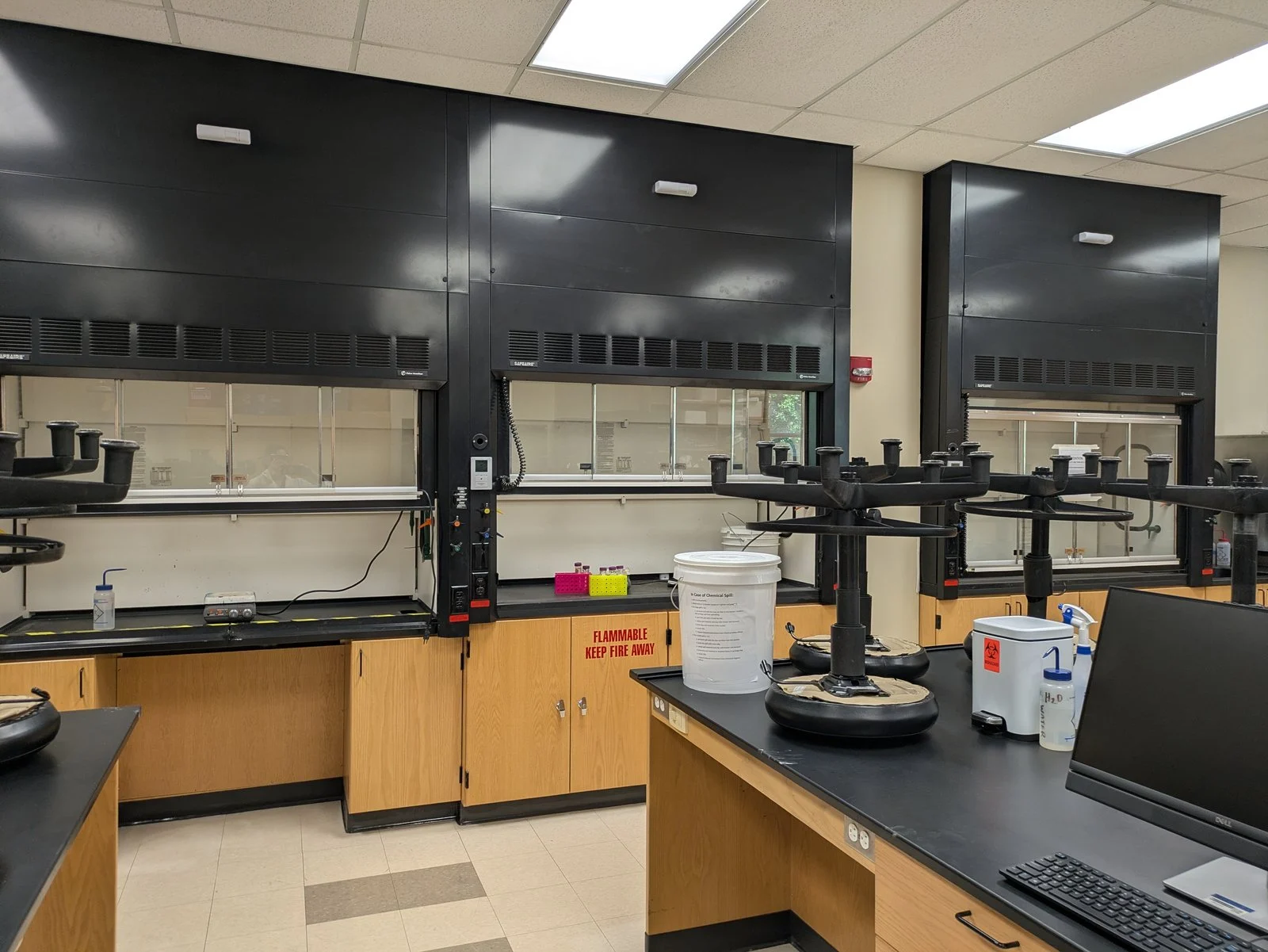
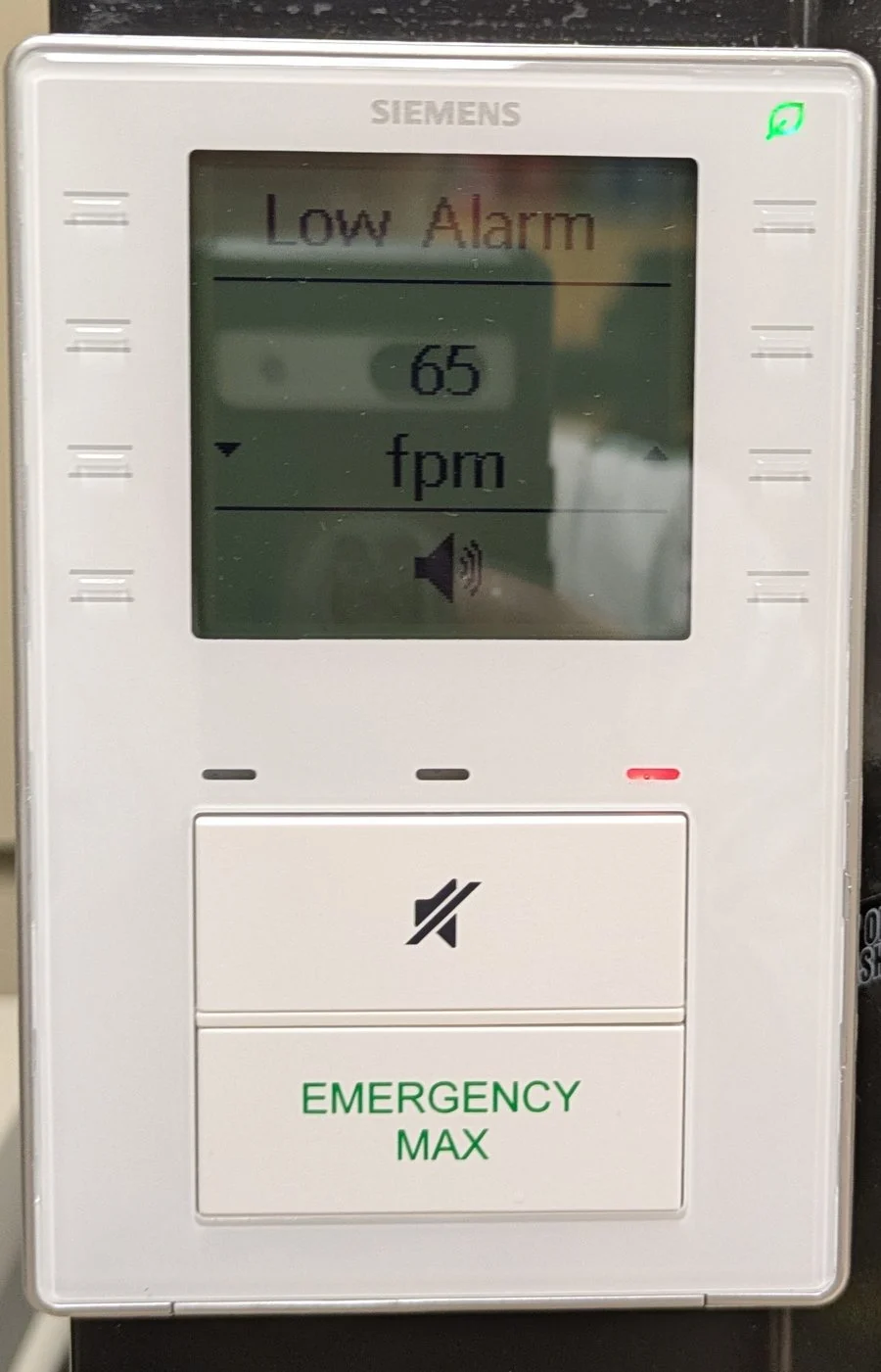
The room didn’t have enough makeup air for all three hoods at working height. That hood wasn’t needed for the lab’s courses, so it came out of service.
More than the meter showed
Three things you can’t read off a monitor
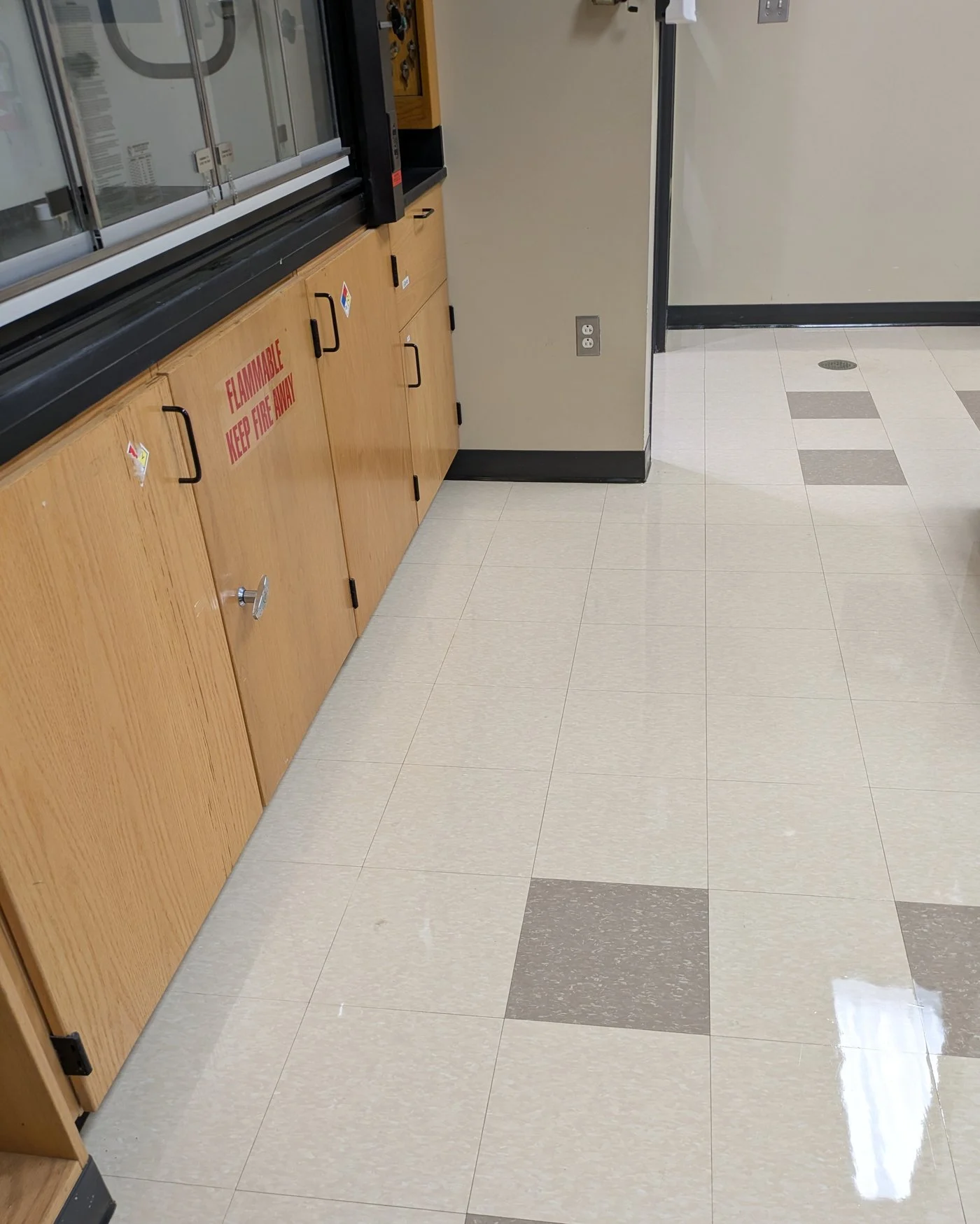
- Walk-by distance. Floor tiles became the yardstick. Two tiles out was the trigger for concern; three is now the minimum for fast movement.
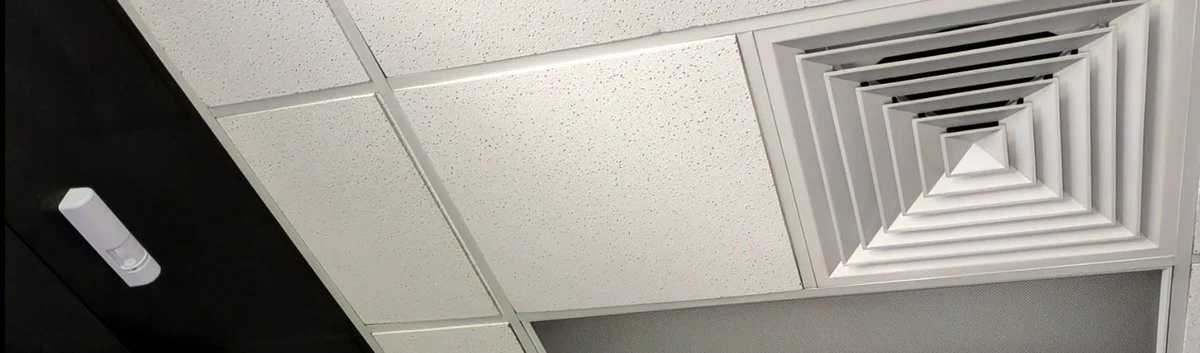
- Sash direction under a supply vent. Sash raised: small loss on one side. Horizontal panels open: held. Same hood, same reading.
- Setback mode. With the occupancy sensor untriggered, the flow was lazier, though still contained, at the same reading.
“I was looking for a reliable method to test our fume hoods and found a good one.”
Tricia Hahn, Chemical Hygiene Officer, John Brown University
From the test